P.04 // LIVE
FIND BUDDY.
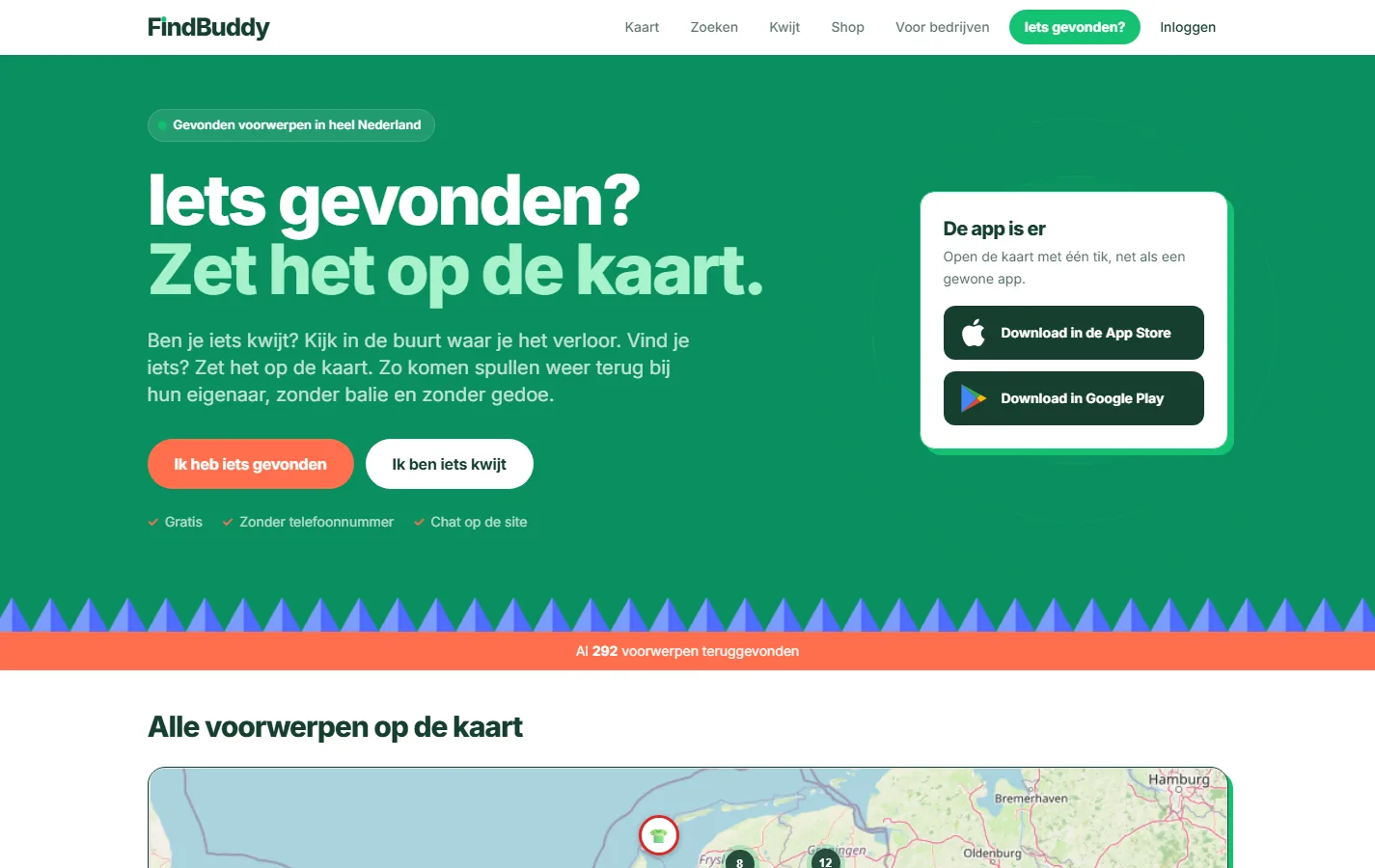
Platform that returns found items to their owners. Finders put an item on the map with a photo and location, owners search near the place where they lost it.
BACKGROUND
You find a bank card on a forest path and want to give it back, but how do you find the owner?
Anyone who finds something can hand it in at the town hall or a front desk, but never hears whether it made it back to the owner. That matters, especially with valuable items. You do not just hand in a gold ring at a desk, because you want to be sure it gets back to its owner.
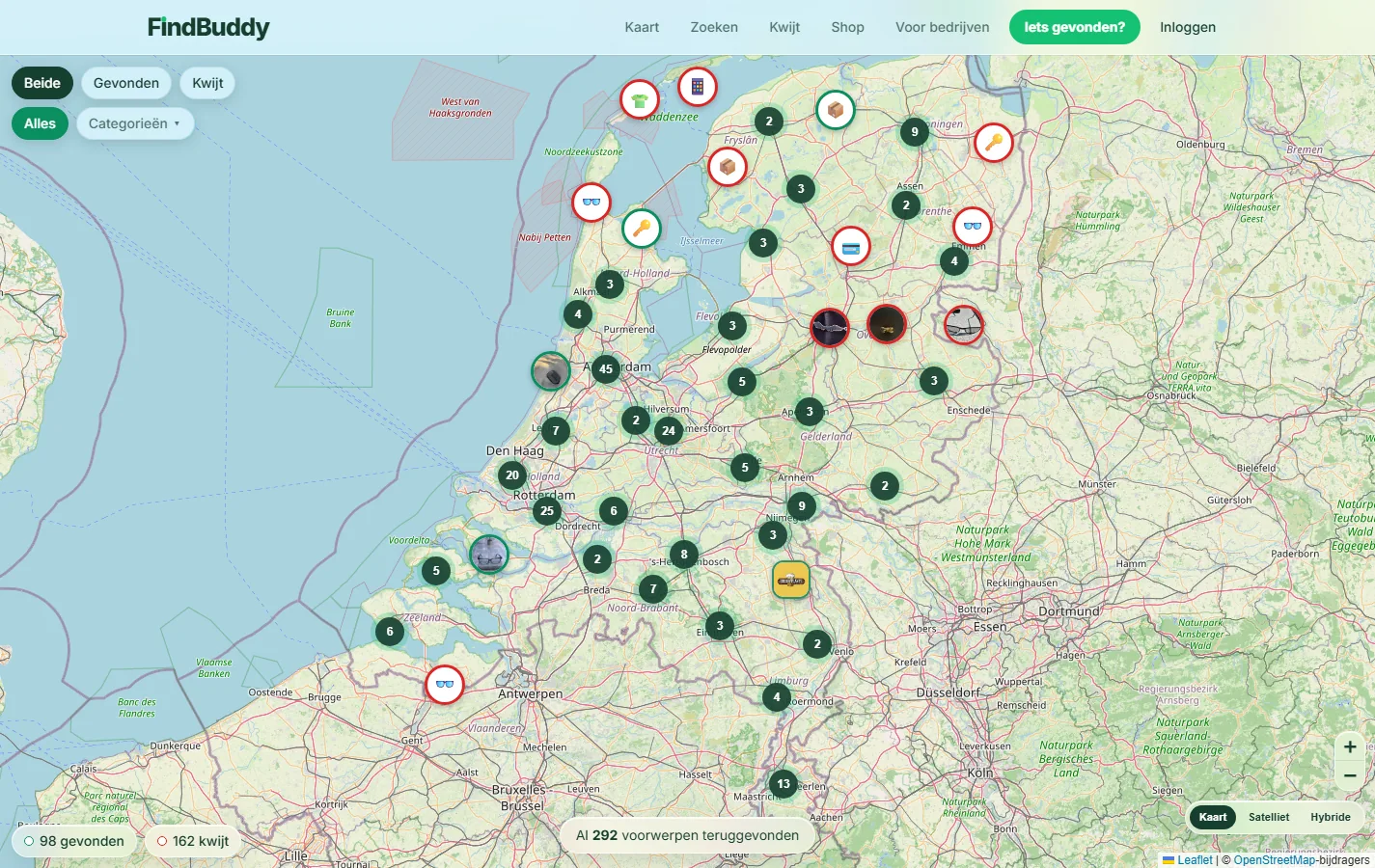
That is why FindBuddy is built so the finder has to make as little effort as possible. There is no need to go anywhere. The finder puts the item on the map with a photo, at the spot where it was found. The owner searches near the spot where it was lost and contacts the finder directly through the chat. The lines are short, without a third party in between, and the finder also hears whether the item is back with its owner.
FindBuddy started in June 2026 as verlorengevonden.nl (Dutch for "lost and found"). The first version was in use eight days after the start. The platform is free, shows no advertising and was set up as a non-profit.
HOW IT WORKS
FOUND SOMETHING
Take a photo, point out the spot on the map and post it. No account needed and it takes a minute. After thirty days an item expires automatically, unless the finder extends it.
LOST SOMETHING
Search by keyword, place or category within a radius around the spot where you lost it. Not there yet? Then you create a lost report and get a notification as soon as something similar appears on the map.
RETURNING IT
Finder and owner message each other without exchanging phone numbers. The owner proves the item is theirs with a recognisable detail, and the finder decides who to hand it to.
THE APP
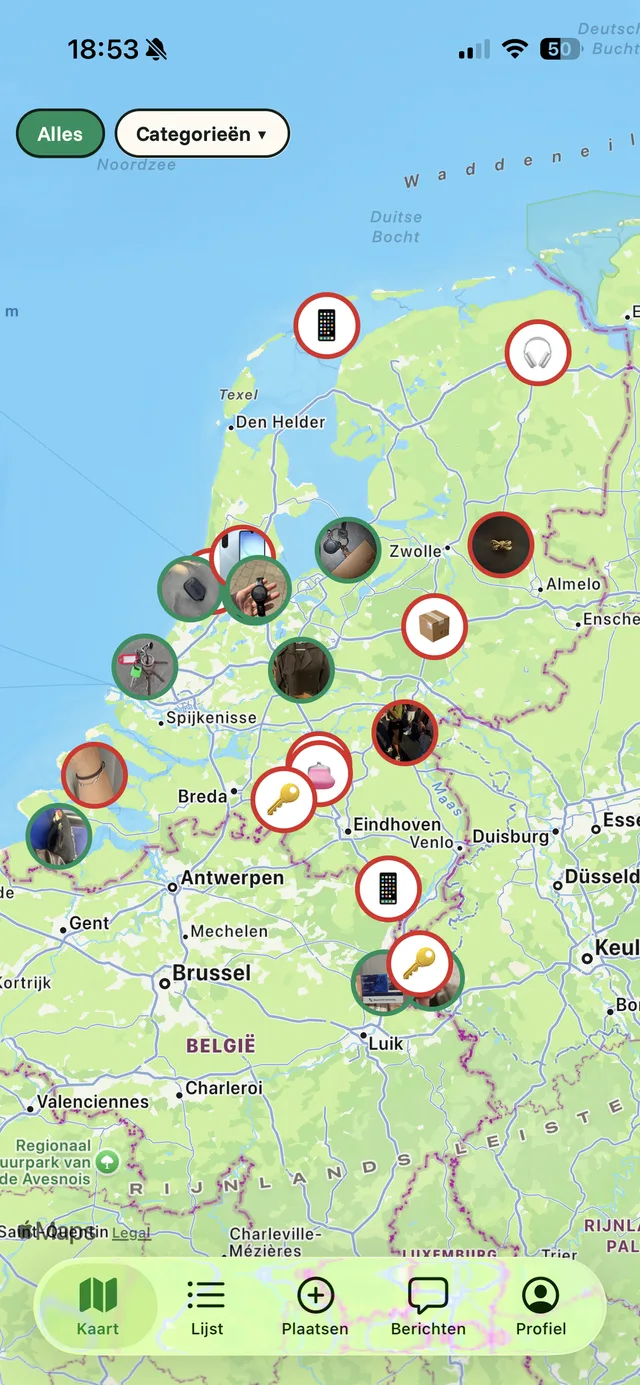
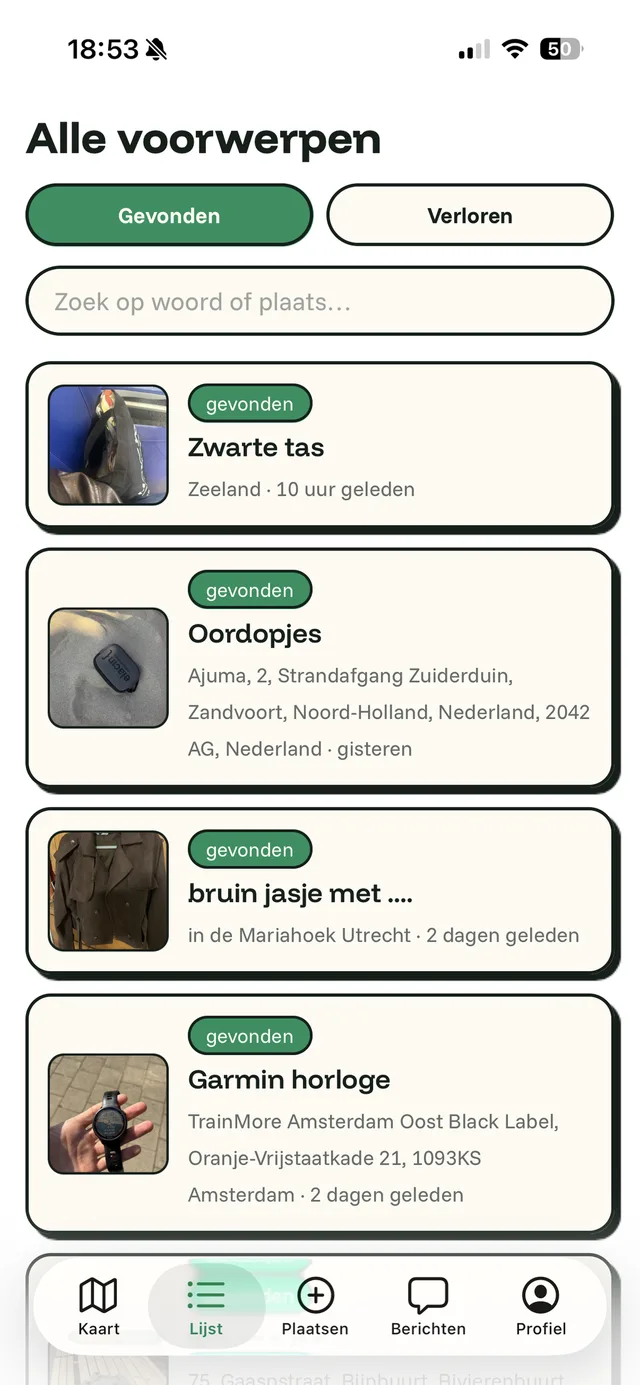
Next to the website there is an app for iPhone and Android, built with React Native (Expo). The app uses the same backend as the website. An item posted on the site appears in the app straight away, and a chat message arrives in both places.
FOR ORGANISATIONS
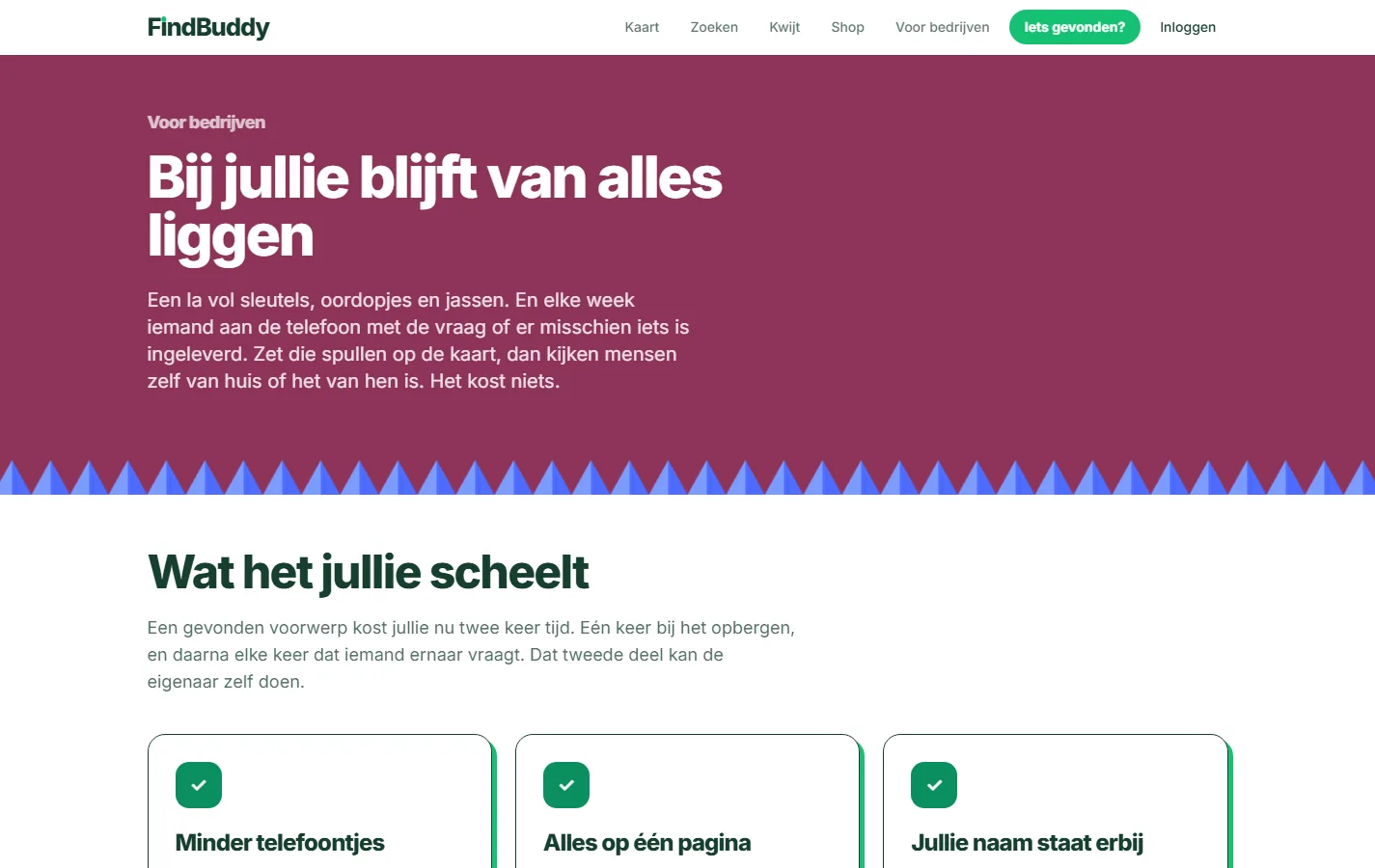
Gyms, festivals and sports clubs collect all kinds of lost items. Think of keys, earbuds and jackets. They get their own account to put their found items on the map, so people can check from home whether something of theirs is there instead of calling. Organisation accounts are verified before they become visible. For events there is a dedicated page with a map of the venue.
To reach organisations I use my own cold outreach agent. It finds candidates on the web, assesses them against an ideal customer profile and prepares an email for each organisation.
OPERATIONS
FindBuddy is set up as an AI-native company. Agents do the operational work, I set the direction.
A coordinating agent directs specialised agents, each with its own task. Think of marketing, customer acquisition, customer contact and support, administration, software updates, app management and website maintenance. Through MCP they are connected to mail, documents and custom tools.
Every process is captured in a skill file that works with models from different providers. Feedback loops pull data and KPIs from the tools the agents work with. The agents use these to adjust their work, and the skill files stay up to date.
My role is a 30-minute check-in every morning with the coordinating agent. In it I review progress, set priorities and take the key decisions.
TECHNOLOGY
Convex is the backend. Database, photo storage, realtime chat and scheduled tasks all live there together and are written entirely in TypeScript. A daily task cleans up expired items.
For the map I use Leaflet with OpenStreetMap, so there are no costs per map view. The code is prepared for multiple countries. A Belgian version in Dutch and French is ready for launch.